
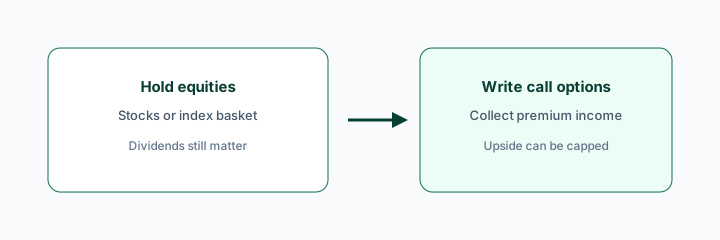
A covered call ETF holds stocks (or a basket) and writes call options against those holdings. Premium income can raise cash distributions; upside is often capped when markets rally hard. Investors sometimes call this a buy-write or option-income strategy.
It is not a plain index fund. It is also not a guarantee of stable income. This guide explains the mechanics and points you to filing-backed Dist. coverage — not a yield ranking.
What you trade off
- More income potential from option premiums (plus dividends where applicable)
- Less upside in strong bull markets than unhedged equity
- Overlay design matters — strike selection, roll timing, and how much of the portfolio is written vary by issuer
Premiums shrink when volatility falls. Distributions can change month to month.
Canadian examples
- HMAX — Hamilton Canadian Financials Yield Maximizer (2025: Covered — earned $385.4M vs paid $198.1M)
- ZWB — BMO Covered Call Canadian Banks (2025: Covered — earned $1.01B vs paid $207.6M)
- QQCL — Global X Enhanced NASDAQ-100 Covered Call (2025: Covered — earned $41.2M vs paid $34.8M)
- HDIV — Hamilton Enhanced Canadian Covered Call (2025: Covered — earned $247.0M vs paid $91.1M)
US examples
- JEPI — JPMorgan Equity Premium Income (FY ended Jun 2025: 96% covered)
- QYLD — Global X NASDAQ 100 Covered Call (FY ended Oct 2025: 73% covered)
- JEPQ — JPMorgan Nasdaq Equity Premium Income (FY ended Jun 2025: 88% covered)
Covered call vs “enhanced” / yield maximizer
Names like Enhanced, Yield Maximizer, or High Income Shares usually signal a more aggressive options overlay (higher notional written, tighter strikes, or concentrated sleeves). That can mean more premium — and often more upside give-up. Read the prospectus and MRFP; do not infer coverage from the name.
Where CoverCall Ledger fits
We do not rank funds by yield. We map earned vs paid from public filings where available. Start with What is distribution coverage?, then open the coverage table. For Canada vs US Nasdaq overlays, see QQCL vs QYLD. For high advertised yields, see YieldMax / single-stock option income.