
People often hear two scary phrases about income ETFs: return of capital (ROC) and “the fund didn’t earn the cheque.” They sound related. They are not the same thing.
This page separates tax characterization of distributions from Dist. coverage (accrual earned vs paid from financial statements). Educational only — not tax advice. Confirm with the issuer’s tax documents and a qualified advisor.
Dist. coverage (CoverCall Ledger)
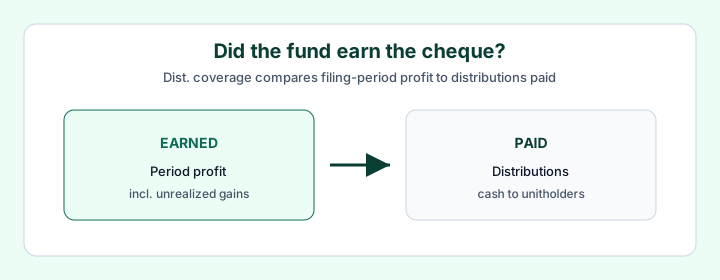
Dist. coverage asks: for a filing year, did period profit (including unrealized gains while holdings are still owned) support cash distributions paid?
- Covered / % — mapped from MRFP / annual FS / N-CSR
- Example: QYLD 73% covered for FY Oct 2025; HHIS 88% for 2025
Weak coverage means distributions exceeded accrual earnings for that period. It does not automatically mean “the payment was ROC.”
Return of capital (tax character)
ROC is a tax label for part of a distribution. Issuers and brokers report how a payment is characterized for tax purposes (income, capital gain, ROC, etc.). Timing often lags the cash payment (estimates, then final slips / Form 19(a) notices in the US).
A distribution can be partly ROC for tax even in years when accrual earnings look strong — or the reverse — depending on tax accounting rules, not just IFRS/US GAAP period profit.
How they can diverge
| Situation | Dist. coverage | Tax ROC |
|---|---|---|
| Strong mark-to-market gains, large cash payout | May show Covered | Still may include ROC for tax |
| Soft markets, payout kept high | May show low % | May show high ROC — or not |
| Stub / launch year | Often messy or tape-only | Tax character still evolving |
Do not use Dist. coverage as a substitute for tax slips.
What to do instead
1. Read Dist. coverage for filing economics on CoverCall Ledger.
2. Read issuer tax breakdowns / 19(a) notices for tax character.
3. Keep yield as a third lens (income rate), not a quality score — see Distribution coverage vs yield.
Related reading
Not investment advice. Not tax advice.